
GEO vs. SEO: What Real Estate Agents Need to Know About AI Search
Search results don't work the way they used to. AI Overviews now occupy a meaningful share of Google's results pages, which means you’ll have to cater to answer engines — a.k.a. AI search engines — on top of Google’s search engine.
But how crucial is it to gain visibility in AI search? Is this something you need to invest in, or is everyone inflating its importance?
Generative engine optimization, or GEO, is still a young discipline. There's no strict or definitive way to rank for it yet, and a segment of businesses believes GEO doesn't need to be approached any differently than SEO. What’s a real estate agent to do?
In this blog, we go in-depth on GEO vs. SEO, discuss misconceptions about AI search, and why and how your brand should use it to gain more visibility.
Table of Contents
AEO/AIO/GEO vs. SEO: What’s the difference?
These acronyms get used interchangeably a lot, but they're not quite the same thing.
SEO (search engine optimization) is the practice of improving a page so it ranks higher in traditional search results, the list of blue links you get on Google or Bing. It's the SEO most agents already know: keywords, site structure, backlinks, page speed.
GEO (generative engine optimization) is the newer practice of improving a page so it gets referenced by AI tools that generate a written answer, like Google's AI Overviews, ChatGPT, or Perplexity. Instead of ranking a page in a list, these tools summarize an answer and cite a handful of sources behind it. GEO is about being one of those sources.
AEO (answer engine optimization) overlaps with GEO but usually refers more specifically to getting featured in direct-answer formats: featured snippets, voice assistant responses, "People Also Ask" boxes. The goal is the same as GEO in spirit, being the source an engine pulls from, but AEO predates the current wave of AI chatbots and originally focused on these older answer formats.
AIO (AI optimization) is sometimes used as a catch-all for optimizing visibility across AI-powered search tools generally, and other times used as another name for GEO. The industry hasn't fully settled on one term, which is part of why this space still feels confusing.
For a real estate agent, the practical distinction that matters most is this: SEO gets a listing page ranked on Google. GEO, AEO, and AIO all describe some version of getting that same page referenced inside an AI-generated answer instead of, or in addition to, a ranked list. The terms differ in emphasis, but the underlying skill they're describing is closely related.
For the purposes of this blog, we’ll be sticking to GEO.
Do I need a GEO strategy if I already have strong SEO?
A July 2026 update from Search Engine Roundtable shows that AI Overviews now appear in 42% of Google searches, which is a sharp increase from just two years ago. A growing share of buyers and sellers will now see an AI-generated answer before they reach a traditional listing site, and there’s still debate about where and what data sources that answer pulls from.
Most businesses do not have a GEO strategy
Between 55% and 61% of small businesses lack a deliberate SEO strategy, according to the Small Business Expo.
GEO adoption is lower still. A 2025 Neil Patel report found that 8% of small businesses have a GEO strategy in place, compared to 21% of mid-sized companies and 16% of enterprises.
This is another reason to have a strong strategy for AI search in place. Being an early adopter will only benefit your business and give you an edge over your competitors.
Do I still need SEO or should I just optimize for AI search?
Ideally, you want to have strategies for both SEO and GEO.
A well-built website helps, but doesn’t automatically mean it will get cited by an AI engine. A 2026 study done by the Association for Computing Machinery in New York found two main drivers for answer engine citation.
The first is relevance: how closely a page’s content matches someone’s search terms. The second is ranking position. When an AI engine pulls from several similar pages, it tends to cite whichever one sits higher on its own list of results, even when a lower-ranked page has similar content.
Other smaller factors also helped: 1) showing the price of a property or service directly on the page, and 2) showing a visible recent date, such as when a listing was posted or last updated.
All this to say, none of this works without real, quality content behind it. A page still needs specific information about an actual listing, service, or market in order to rank or have relevance. The study also found that reformatting a page without changing its content did not help at all.
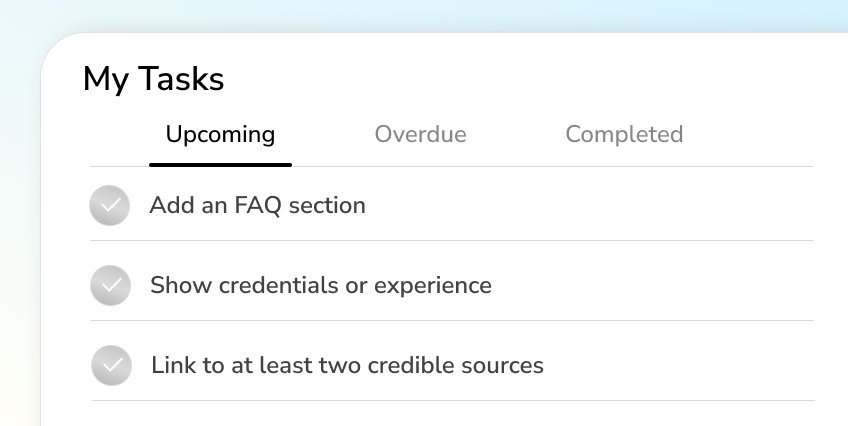
Build strong, relevant content, optimize for search rankings, and keep key details like pricing and fresh dates visible to improve both SEO and GEO performance.
Why Did My Page Get Cited Last Week but Not This Week?
A 2026 study from the Association for Computing Machinery found that a single AI engine can return different citations for the same query run twice, and that generative search engines and traditional search engines often pull from different sources altogether. This could be why citations aren’t as stable as Google search.
On the other hand, a page that ranks well on Google today generally keeps that ranking for a while, barring a major algorithm update.
Does this mean you should ditch GEO altogether? Not quite. In fact, it should give you more reason to invest in a solid, reliable, and intentional GEO strategy for your business.

What to Look For In a GEO Vendor
AI citations don't always behave the way traditional search rankings do, at least not yet. A vendor promising guaranteed citations or guaranteed rankings is promising more certainty than the current landscape really allows.
What matters more is finding a vendor who pays attention, who checks which pages are getting cited and which aren't, tests specific changes, and adjusts based on what comes back. A good vendor treats your visibility as an ongoing responsibility, which it is, instead of a one-time project.
Frequently Asked Questions
Not based on anything in the current research. AI Overviews and traditional search results appear side by side, and ranking well in one doesn't guarantee visibility in the other. The two work together rather than one replacing the other.
Keep listing and service pages specific and current. Include actual pricing where relevant, keep dates updated, and write with real, firsthand detail about the properties, neighborhoods, or services being described, rather than generic descriptions that could apply to any listing.
No. Research from Ahrefs found that Google doesn't penalize content for being written with AI tools. What does get penalized is thin, generic content, regardless of who or what wrote it. A page that repeats common phrases without real information about a specific property, market, or service won't perform well, whether a person wrote it or an AI tool generated it.
Relevance and specificity matter more than domain size in the research on AI citations. A page that closely matches a specific search, with concrete details like pricing and a recent date, has a real shot at getting cited, even against a page from a larger, more established site.
The same website works. GEO doesn't require a separate site or platform. It requires the existing site to have clear, specific, well-organized content, since that's the material an AI engine has to work with when it's deciding what to cite.
Let’s Build You A Website That Gets Seen
Your website should be built to get found, no matter how people are searching. Talk to our experts at Agent Image to learn more. Book a call with us at 1.800.979.5799.